
Best time to post on Reddit: days, hours, and subreddits
On Reddit, great posts die quietly if they show up at the wrong minute. Early votes and comments decide whether you hit Hot, Rising, or get buried. There is no single magic hour, only patterns that change by subreddit, weekday, and time zone.
Here is a simple, data-backed way to find your best time to post on Reddit. You will learn how to read day-by-hour heatmaps, factor in time zones and competition, pick a cadence you can sustain, and run quick tests until the winning windows are obvious.
Why timing wins on Reddit
Reddit feeds reward early velocity. When a post lands, the first 30 to 60 minutes act like a launch window. If you collect steady upvotes and comments in that window, the post climbs Rising, then holds position in Hot. If you stall early, later engagement rarely rescues it.
Two forces shape that window:
- Attention supply. More users online means more potential voters and commenters.
- Competition density. More new posts per minute means less exposure per post.
Your goal is to post where those curves cross, enough people to react, not so many new posts that you roll off the page in minutes. In a 500k member subreddit, the difference between posting at 9:10 and 10:40 in the primary time zone can be the difference between 15 views in the first two minutes and 150. Velocity compounds, so the right 60-minute slot matters more than the right day.
Mods and rules also shape timing. Many subs gate self-promotion, require flairs, or limit frequency. A smart Reddit marketing tool should account for rules so you do not waste your best slot on a post that gets removed.
Use heatmaps to pick your windows
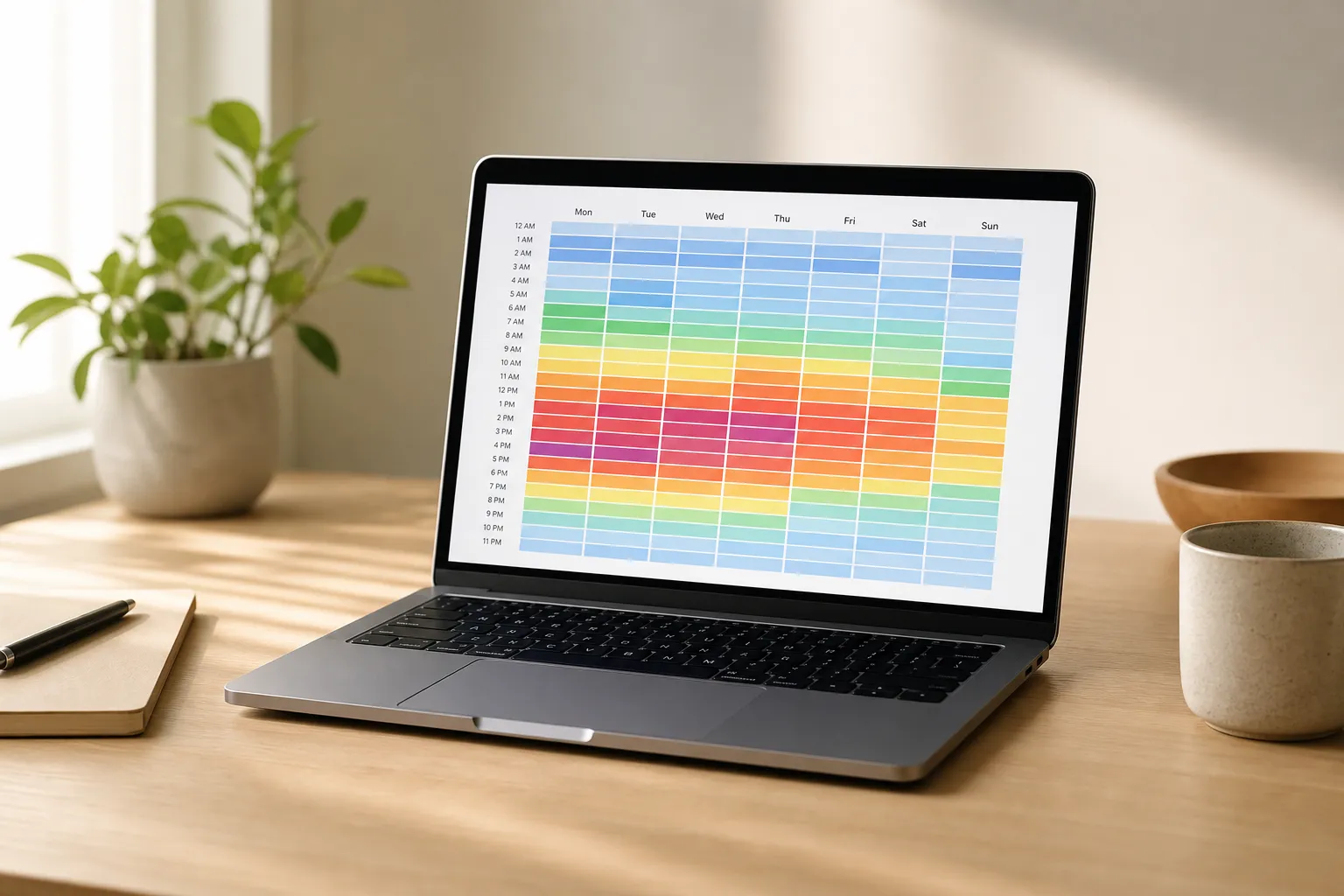
Guessing is slow. A focused analyzer does the pattern spotting for you. SubredditAnalyzer ranks relevant subreddits for your topic, then shows a day-by-hour heatmap of recent engagement with notes on rules and post formats that perform. You get a shortlist of windows to test, not a vague best-time average.
Spot your peak hours
Open the heatmap for a target subreddit. Look for bright clusters that repeat week over week. These are your prime slots. If r/startups shows Tuesday to Thursday, 8 to 11 am in its dominant time zone, make those your A slots for high-effort posts like case studies, teardown threads, or AMAs.
Avoid dead zones
Dim cells signal low return. Common dead zones include weekday after midnight and weekend late nights. Use those hours to draft, comment, and schedule. If you must post off-peak, compensate with a more curiosity-driven title and be ready to seed early comments to kickstart discussion.
Weekday vs weekend patterns
Work subs often peak midweek mornings and early afternoons. Hobby, travel, and gaming subs skew to weeknights and weekend afternoons. The heatmap shows whether Saturday is a sleeper win or a ghost town. Treat each subreddit as its own channel, even if the topics overlap.
Time zones, competition, and subreddit choice
Most subreddits lean toward one or two time zones. SubredditAnalyzer detects the dominant zone from engagement patterns, so your 10 am actually hits when members are scrolling, not eating dinner. A few rules of thumb help you align:
- Global subs. Test US Eastern morning and early EU afternoon. Watch which window produces faster votes at 15 and 60 minutes.
- Regional subs. Post in the region’s workday or early evening. For AU or EU communities, do not optimize for Pacific time out of habit.
- Commute and lunch. Commute and lunch hours vary by region. Let data tell you whether 12 to 1 pm local is a spike or a lull.
Competition matters as much as raw activity. Before posting, open New and count how many posts appear in one minute. If the queue is moving at five posts per minute, you have seconds of top-row exposure. If it is one post per minute, your post lingers. SubredditAnalyzer factors in recent posting velocity so you can prioritize slots with high attention and manageable competition.
Choosing the right communities is half the battle. If you are searching for the best subreddits for startups, start broad with r/startups and r/Entrepreneur, then add niche subs like r/SaaS, r/growmybusiness, r/productmanagement, or r/AskMarketing. Patterns differ. A founder AMA can thrive midweek mornings in r/startups, while a tactical growth teardown performs better after work in r/SaaS. Build a tiny schedule, not a universal rule. For example:
- r/startups: Tue 9:30 am ET, long-form insight post with resource links, AMA follow-up comments ready.
- r/SaaS: Wed 6:00 pm ET, concise metric-backed teardown with a clear takeaway and a template in comments.
- r/Entrepreneur: Thu 10:00 am ET, story-led post with 3 concrete lessons, no links if rules restrict them.
Cadence, rules, and a simple test loop
Cadence keeps you consistent without annoying regulars or breaking rules. Start conservative, then scale what works:
- Micro subs under 50k members. One post every 1 to 2 weeks. Spend the gap engaging in comments to build recognition.
- Mid-size subs 50k to 500k. One post per week. Add a second only if the first earns traction and rules allow it.
- Large fast subs 500k+. One to three posts per week across different days. Quality and timing precision matter more than volume.
Read the rules every time. Watch for self-promo limits, link bans, title conventions, and flair requirements. If links are restricted, lead with native, discussion-first content and place any resources in a top-level comment only if the rules permit it. SubredditAnalyzer flags common rule traps and suggests formats that tend to stick.
Turn timing into a small experiment loop you can run in two to three weeks:
- Pick two windows per subreddit. One obvious peak from the heatmap, one nearby challenger with slightly lower competition.
- Control your variables. Keep topic type, length, and format consistent. Change only the time and weekday.
- Instrument and log. Use UTM tags for links. Record upvotes at 15, 60, and 180 minutes, comments, saves, and whether you were early in the daily queue.
- Review and lock an anchor slot. If one window beats the other in two of three tries, claim it. Add a second slot only after the first is repeatable.
If you like structured, explainable playbooks, this guide to resume screening software with explainable AI is a useful model for running controlled experiments and codifying what works. Different domain, same idea, define the levers, test them in a tight loop, standardize the winners.
Seed early discussion. Block 20 minutes after you publish to reply, clarify, and add useful context. Ten thoughtful comments in the first half hour can push a good post over the threshold into sustained visibility.
Key takeaways
- There is no universal best time to post on Reddit. Each subreddit has its own peaks and lulls.
- Use heatmaps to find repeatable day-by-hour clusters, then post into those windows, not vague averages.
- Align with the dominant time zone and weigh competition in the New queue, not just audience size.
- Start with a conservative cadence, respect rules, and add slots only after results repeat.
- Run a simple two-window test loop, log early velocity, and lock in your anchor times.
Treat timing like any other channel variable. Use a data-driven subreddit analyzer, respect each community’s rules, and keep iterating. With a few focused weeks, your posts will start landing when people are ready to engage.